
Case Study:
Camp Canoe
Boutique Lodge and Tented Accommodation
Paid Search, Dynamic Geo-targeting, CRO and Landing Page Development
The challenge
When Secret Source began working with Camp Canoe in early August 2025, the property was consistently reaching close to its ideal occupancy during high season, but falling short of it in low season.
At the same time, a meaningful share of the marketing budget was tied up in a channel that wasn’t being used efficiently, limiting the return the property was getting on its overall ad spend.
The Objective
Maximise rate and occupancy during high season while building a genuine low season demand funnel, so that Camp Canoe’s marketing investment worked harder across the full year rather than being concentrated in the months that were already performing well.
Our strategy
Different source markets enter their prime booking lead time at different points in the year. Rather than running a static, always-on targeting setup, Secret Source shifted geo-location targeting dynamically between local, European and South American markets as each entered its prime lead time for high season and low season travel respectively. Ad spend was concentrated on the audience most likely to convert at that specific point in the calendar, rather than spread evenly, and inefficiently, across markets that weren’t yet in-market.
The Solution
Alongside the targeting shift, two changes were made directly to Camp Canoe’s booking funnel:

A new landing page was developed for the low season, presenting a
dual-property offer to give prospects a stronger reason to enquire outside of peak months.

User behaviour data showed a clear drop-off between site visit and the booking engine. A new call to action and booking method was introduced on the site to address that drop-off point directly.

The Impact
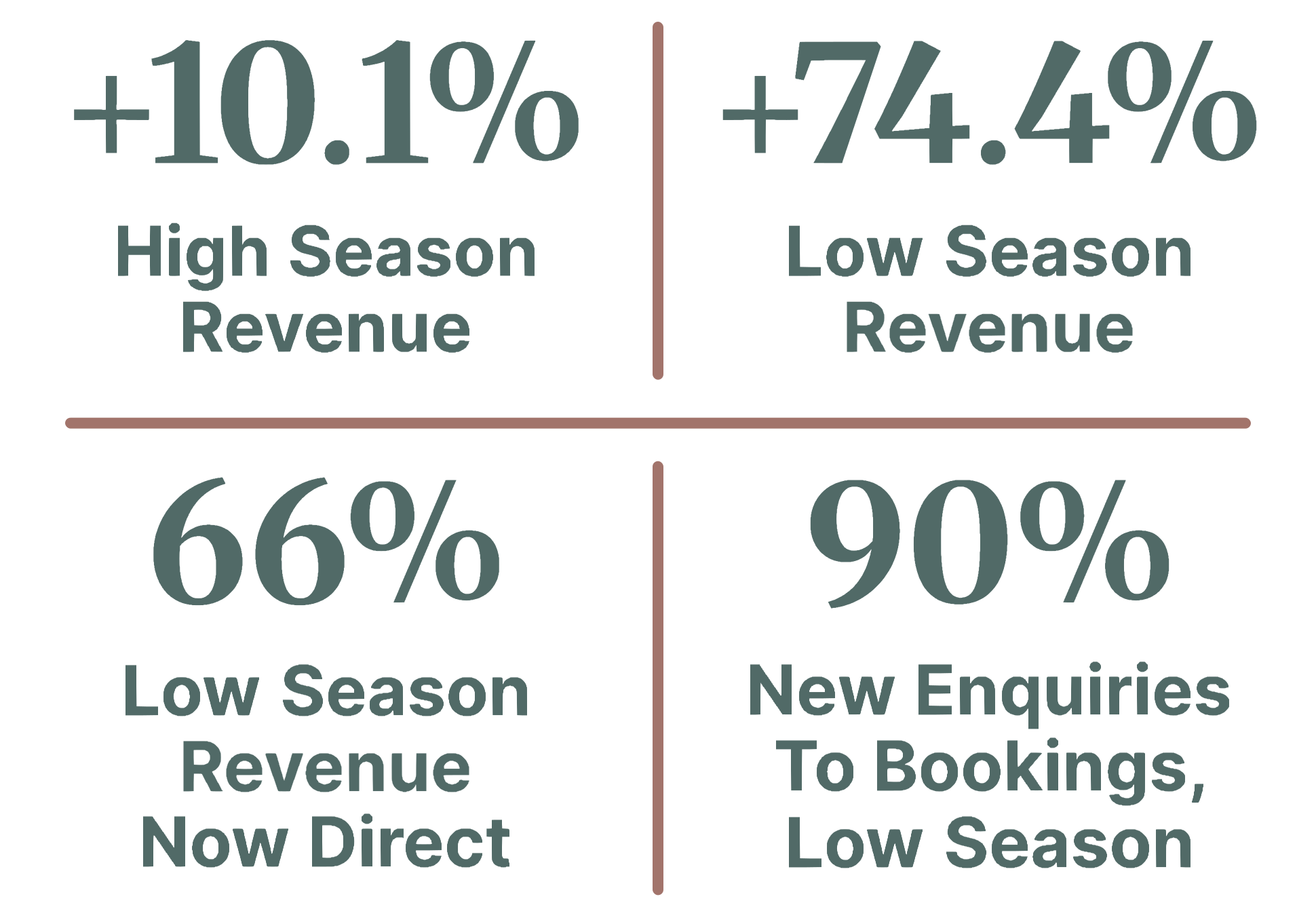
Camp Canoe grew revenue year-on-year in both the high season and low season comparison windows. High season (Dec-Apr) gross revenue is up 10.1% on 8.2% more bookings and a 2.4-point occupancy gain. Low season (May-Jul) is growing off a smaller base but far faster: gross revenue is up 74.4%, driven by a near-doubling of room nights sold and a sharp shift toward direct, own bookings.
The clearest sign of that shift is the direct booking share itself. In high season,
own bookings grew from 36% to 38% of revenue, a modest but steady gain.
In low season, own bookings surged from 30% to 66% of revenue, a 275.7% year-on-year increase in direct booking value and the single biggest swing in the whole data set. That is the channel that was previously being used inefficiently now converting into demand the property controls directly, without paying away margin on commission.
The Results
Direct booking share is the standout result across both seasons. High season own bookings rose from 36% to 38% of revenue; low season own bookings jumped from 30% to 66%, a 275.7% year-on-year increase in direct booking value, now making up two-thirds of low-season revenue. That is direct evidence of budget once tied up inefficiently now converting into demand the property controls, rather than paying away margin through commission.
Commission moved in opposite directions across the two periods as a result. In high season it grew faster than revenue as online volume rose slightly; in low season it fell despite revenue growth, because the mix flipped toward direct, own bookings, which don’t carry the same commission cost.
Low-season occupancy nearly doubled (20.2% to 32.7%) but remains well below high-season occupancy (76.3%), so there is still meaningful room-night capacity to convert outside peak season, the next phase of the funnel Secret Source is building.
Extras revenue outpaced room revenue in both periods, pointing to stronger ancillary spend per stay as the guest mix has broadened.